
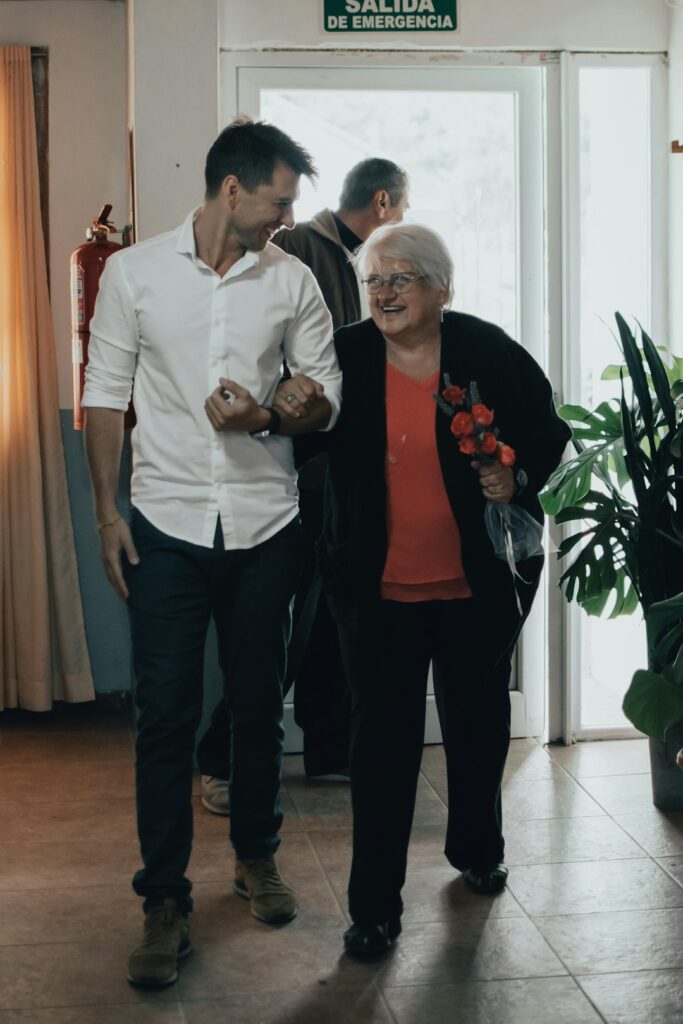
Assisted living can support senior mobility by combining safe surroundings, regular movement, appropriate assistance, and daily routines that encourage independence. The goal is not to keep residents seated or prevent every risk of movement. It is to help each person move as safely and confidently as possible.
Mobility includes more than walking from one room to another. It also involves standing from a chair, getting in and out of bed, using the bathroom, climbing steps, reaching for items, and participating in social activities. These everyday movements help preserve strength, balance, confidence, and quality of life.
How does assisted living help older adults stay mobile?
Assisted living promotes mobility by making movement part of the normal day. Residents may walk to meals, take part in group activities, move through common areas, or complete familiar self-care tasks with the level of help they need.
Regular movement matters because inactivity can lead to weaker muscles, reduced balance, stiffness, and greater difficulty completing routine tasks. A supportive setting can make it easier to remain active without expecting a person to manage every activity alone.
Mobility support may include:
- Encouragement to walk short distances rather than remain seated
- Assistance with transfers, such as moving from a bed to a chair
- Supervision during activities that could present a fall risk
- Help using mobility aids correctly
- Rest periods for people who tire easily
- Routines that balance activity with safety
The appropriate amount of assistance varies. Too little support can increase the risk of falls, while too much help may discourage residents from using abilities they still have.
What types of exercise support mobility?
Effective mobility programs usually include a combination of walking, strength-building, flexibility, and balance activities. Older adults generally benefit from aerobic movement, muscle strengthening, and balance exercises, adjusted for personal health and ability.
Examples may include:
- Walking in hallways or safe outdoor areas
- Seated leg lifts and ankle movements
- Repeatedly standing from a chair
- Light resistance exercises
- Stretching for the legs, hips, shoulders, and back
- Tai chi or other controlled balance activities
- Gentle dancing or movement to music
Exercise does not need to be intense to be useful. A person who cannot walk for long may benefit from several brief periods of activity spread throughout the day. Someone with arthritis, heart disease, Parkinson’s disease, osteoporosis, or a history of falls may need a more individualized plan.
Any new or demanding exercise should be consistent with the person’s medical needs. Pain, dizziness, chest discomfort, unusual shortness of breath, or sudden weakness should not be treated as normal signs of exercise.
Why do assisted living environments pay attention to fall prevention?
Fall prevention is closely connected to mobility. A fall can lead to fear of walking, injury, hospitalization, or a prolonged loss of independence. Safe design and thoughtful routines help residents continue moving while reducing avoidable hazards.
Mobility-supportive features may include:
- Clear walking paths
- Adequate lighting, especially near bedrooms and bathrooms
- Handrails and grab bars where appropriate
- Non-slip flooring
- Chairs with stable arms and suitable seat height
- Frequently used items kept within reach
- Prompt attention to spills or other obstacles
Medication effects, vision changes, footwear, blood pressure changes, and poor sleep can also affect balance. A resident who begins stumbling, holding onto furniture, or avoiding activities may need a reassessment rather than simply being told to “be more careful.”
Seasonal conditions matter in Taylor, PA. Snow, ice, wet entryways, and shorter daylight hours can make outdoor walking more difficult. During those periods, indoor walking routes, suitable footwear, good lighting, and planned activities can help maintain movement without unnecessary exposure to hazardous surfaces.
How does daily assistance preserve independence?
Assistance does not always mean doing a task for someone. Often, the safer approach is to provide setup, reminders, standby support, or a steadying hand while allowing the resident to complete as much of the task as possible.
For example, a resident may be able to dress independently but need help choosing safe footwear. Another person may walk independently but require assistance rising from a low chair. Someone else may need help getting started in the morning but manage the rest of the routine alone.
This approach is sometimes called promoting the person’s highest practical level of independence. It recognizes that abilities can vary from day to day depending on fatigue, pain, illness, medication changes, or mood.

Small choices can also encourage mobility. Residents may be invited to choose between two activities, walk to a nearby common area, help set a table, or participate in light tasks that involve standing and reaching. These activities have a practical purpose and may feel more meaningful than exercise alone.
Can assisted living support mobility after a hospital stay?
It can, although the level of support depends on the person’s condition and care needs. After a hospitalization, illness, or injury, an older adult may temporarily need more help with walking, transfers, bathing, or stairs.
A safe mobility plan should reflect current ability rather than assume the person has returned to their previous level. Staff and family members may observe whether the resident is:
- Walking more slowly than usual
- Having trouble standing
- Using a walker or cane incorrectly
- Becoming unusually tired
- Avoiding meals or activities
- Experiencing pain or dizziness
- Having new confusion or weakness
Changes should be communicated to the appropriate healthcare team. Physical or occupational therapy may be needed when a person requires skilled evaluation, targeted exercises, or training with equipment. Assisted living can provide daily support, but it does not replace medical assessment or rehabilitation when those services are necessary.
What should families ask about mobility support?
Families in Taylor can ask practical questions before or after a move. The most useful questions focus on how movement is handled in everyday life, not only whether an exercise class exists.
Consider asking:
- How are residents encouraged to walk and participate in daily activities?
- What assistance is available for transfers and bathroom trips?
- How are falls, near-falls, or changes in walking reported?
- Are mobility aids checked for proper use?
- How are outdoor activities adjusted during snow, ice, rain, or extreme heat?
- What happens if a resident becomes weaker or less steady?
- How are family members informed about meaningful changes in mobility?
A useful mobility plan should be specific. “Encourage activity” is less informative than noting that a resident walks to meals with a particular device, needs supervision in the evening, or benefits from seated exercises after breakfast.
What is a common misconception about mobility in assisted living?
A common misconception is that using a wheelchair, walker, or cane means a person is no longer mobile. Mobility is not limited to walking without assistance. Safe movement with equipment, supervision, or occasional help can still support independence and participation.
Another misconception is that avoiding all movement prevents falls. In practice, prolonged inactivity can reduce strength and balance. The safer goal is usually not complete restriction, but appropriate activity in an environment that accounts for the person’s abilities and risks.
Assisted living promotes mobility best when movement is treated as part of everyday care. Safe walking routes, individualized support, regular activity, and timely attention to changes can help older adults remain engaged in the routines and relationships that make daily life meaningful.
