
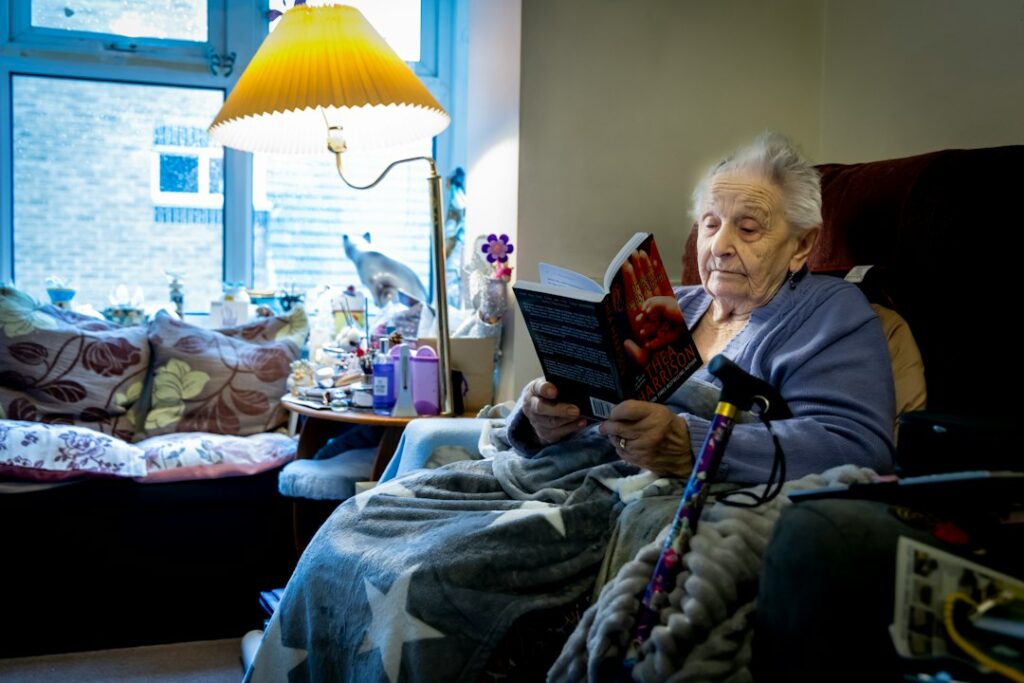
What adaptations help seniors with visual impairments in assisted living?
The most helpful adaptations improve lighting, reduce glare, increase contrast, clear walking paths, and make everyday objects easier to locate. Changes should match the person’s specific vision condition, mobility, hearing, memory, and comfort with assistive technology.
Visual impairment can involve blurred vision, loss of central vision, reduced peripheral vision, difficulty seeing in dim areas, glare sensitivity, or trouble distinguishing similar colors. A person may see adequately in one setting but struggle in another, such as moving from a brightly lit common room into a darker hallway.
Assisted living adaptations should support independence without creating unnecessary restrictions. The goal is not simply to make spaces brighter, but to make them more predictable, readable, and safe.
How should lighting be adjusted?
Consistent, evenly distributed lighting is usually more useful than a single very bright light. Seniors with low vision may need more illumination for reading, walking, and identifying objects, but harsh glare can make vision worse.
Helpful lighting adjustments include:
- Bright, diffused lighting in bedrooms, bathrooms, hallways, dining areas, and activity rooms
- Clearly reachable light switches near beds, entrances, and bathroom doors
- Nightlights or low-level pathway lighting between the bed and bathroom
- Task lighting for reading, medication management, crafts, and meals
- Curtains or shades that reduce direct sunlight and reflected glare
- Prompt replacement of burned-out bulbs and malfunctioning fixtures
Lighting should be checked at different times of day. A room that appears safe in the afternoon may be difficult to navigate early in the morning or after sunset. During winter in Taylor, PA, shorter daylight hours and snow glare can make transitions between indoor and outdoor spaces especially challenging.
Motion-activated lighting may help in some areas, but it should not switch off while a person is standing or moving slowly. Controls should remain simple and familiar.
Why do color and contrast matter?
Contrast helps a person distinguish an object from its background. A dark chair against a light wall may be easier to see than a chair in a similar shade. A light-colored grab bar against a dark wall, or a dark toilet seat against a lighter bathroom surface, may improve visibility.
Practical uses of contrast include:
- Marking the edge of stairs with a clearly visible strip
- Using plates that contrast with the table and food
- Choosing dark handles or switches on light walls
- Placing brightly colored tape around commonly used controls
- Using contrasting bedding, towels, and bathroom fixtures
- Avoiding patterned rugs, upholstery, and dishes that visually blend together
Color should not be the only identifying feature. Some forms of vision loss make certain colors difficult to distinguish, and lighting can change how colors appear. Shape, texture, position, and labeling should also be used.
How can walking areas be made safer?
Clear, consistent pathways reduce the need to search visually while walking. Furniture should not be moved frequently, especially in a private room. If a change is necessary, the resident should be told about it and given time to become familiar with the new arrangement.
Walking areas should be checked for:
- Loose rugs, cords, clutter, and furniture that extends into pathways
- Items left on the floor, including shoes, bags, and laundry
- Shiny surfaces that create confusing reflections
- Doorways or hallways with abrupt changes in lighting
- Wet floors or tracked-in snow and ice during winter weather
- Poorly marked changes in floor level
Handrails should be easy to see and easy to grasp. Stair edges, ramps, and thresholds deserve particular attention because visual impairment can make depth changes difficult to judge.
A person who uses a cane, walker, or wheelchair may need additional space for turning and locating obstacles. Mobility equipment should be stored in a predictable location rather than left in a travel path.
What changes help in bathrooms?
Bathrooms combine several risks: water, slippery surfaces, reflective finishes, limited space, and frequent nighttime use. Good lighting should illuminate the sink, toilet, shower, and floor without shining directly into the resident’s eyes.
Useful adaptations may include:
- Non-slip flooring or securely fitted non-slip mats
- Grab bars placed where the person actually enters, sits, stands, and turns
- High-contrast toilet seats, grab bars, and faucet handles
- Clearly labeled hot and cold controls
- A shower chair when standing is unsafe or tiring
- Storage that keeps soap, towels, and personal items in consistent locations
- A nightlight or illuminated route from the bedroom

Water on the floor should be cleaned promptly. A resident with poor vision may not notice a wet area until balance has already been affected.
How can meals and medications be easier to manage?
Meals become more manageable when plates, cups, utensils, and food are easy to identify. Staff or family members can describe where items are placed using a clock-face method, such as “the vegetables are at three o’clock.” Food should not be moved without explanation.
Large-print labels, tactile markings, talking devices, magnifiers, and organized storage can help with medication routines. However, medication adaptations must not rely on guesswork. If a person cannot reliably identify pills, bottles, or instructions, the care plan should include a safe medication-management process.
Lighting at the dining table should be bright enough for reading menus and seeing food, while avoiding glare from polished tables, windows, or clear plastic coverings.
What communication practices are respectful and useful?
Staff should identify themselves when entering a room, speak directly to the resident, and explain what is happening before touching or guiding the person. A person with visual impairment should not be pulled by the arm without warning.
Useful communication habits include:
- Announcing when leaving a room
- Describing unfamiliar surroundings
- Giving specific directions, such as “the chair is directly behind your knees”
- Keeping important items in agreed-upon locations
- Asking before rearranging personal belongings
- Reading notices, menus, and activity information aloud when requested
Visual impairment does not necessarily mean hearing loss or cognitive impairment. Speaking loudly, simplifying unnecessarily, or assuming a person cannot make decisions can be discouraging and inaccurate.
How should technology and emergency planning be adapted?
Phones, tablets, call systems, and televisions may be easier to use with enlarged text, increased contrast, voice output, tactile markers, or simplified menus. Frequently used controls should be placed where the resident can reach them without searching.
Emergency plans should account for reduced vision during smoke, power outages, nighttime evacuations, and unfamiliar routes. Staff should know whether the resident can identify alarms, read signs, use stairs, and locate an emergency call device. Practice can reduce confusion, but drills should be explained clearly and conducted in a way that does not create unnecessary fear.
Power outages deserve special attention during winter storms. Flashlights, backup lighting, and essential devices should be stored in known locations and checked regularly. A resident should not be expected to find unfamiliar equipment in darkness.
When should adaptations be reassessed?
Changes in vision, medication, balance, strength, or confidence can alter what is safe. A new fall, repeated bumping into furniture, difficulty finding personal items, or reluctance to leave the room may indicate that the environment needs review.
An eye examination can identify changes that may be treatable, while a safety assessment can identify environmental hazards. Family members and assisted living staff should include the resident in these discussions. The person living with the visual impairment often knows which adaptations are genuinely helpful and which create frustration.
The most effective plan is specific: brighter lighting for the reading chair, a fixed route to the bathroom, a contrasting cup at meals, or a clearly marked control panel. Small environmental details can determine whether a resident moves confidently through assisted living or avoids activities because the setting feels unpredictable.
